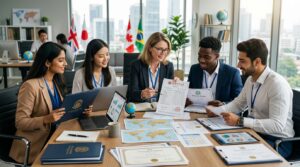
Recently, the United States applied a significant policy change. This shift affected thousands of international students and professionals. What is it? The end of visa interview waivers would be effective on October 1. This reform requires all visa applicants who have been approved to attend an in-person interview at a U.S. embassy or consulate. Additionally, this applies regardless of whether they have held a U.S. visa before or followed the previous waiver criteria.
Key Takeaway
For individuals who aims to study, work, or attain a professional licensure in the United States, the implementation of reform opens complexities to an already complicated procedure. This article lays bare what it means to understand the process and how applicants can adapt their timeline for essential preparation leading to a successful application.
Understanding the Policy Change
How do we simplify the complex process of reform? Before, specific applicants could either renew their visas or apply for new ones even without an in-person interview. The former arrangement included first-time applicants in specific low-risk categories and individuals renewing their visa within a particular timeframe after their previous visa expired. These waivers sped up the process and reduced the burden on both applicants and consular offices.
However, the abolition of these waivers is rooted in the improved security protocols and the goal to conduct a more detailed selection of visa applicants. The primary intention is to strengthen border security and visa integrity. Yet this impacts duration as it means longer wait times, an increased list of documentation requirements, and more extensive preparation for all applicants.
Immediate Impacts on Students and Professionals
Extended Processing Times
The U.S. embassies and consulates worldwide implemented the mandatory interviews. In effect, this requirement caused substantial backlogs in appointments. In fact, in some countries, the waiting times for interview appointments have lengthened to several months. This delay can expose enrollment deadlines for students or cause job start dates for professionals to overlap.
Increased Documentation Requirements
For interview officers, they now have the opportunity to review credentials more thoroughly during the face-to-face meetings. This evaluation highlights the importance of obtaining complete, verified, and properly evaluated documentation more than ever.
Greater Need for Preparation
Although the in-person interview is often viewed as merely a formality, it is actually not. Consular officers assess not only your paperwork. They also evaluate your intentions, ties to your home country, and the legitimacy of your educational or professional plans in the United States.
What To Do Now?
1. Apply for Your Visa Earlier Than Planned
The first thing to adjust is to build a substantial extension period into your visa application process. This means that if you previously planned to apply three months before the start date or job beginning, you have to consider extending that to six months or even more.
Continue to monitor the U.S. Department of State’s website for the current wait times for interviews at your local embassy or consulate. These data are updated regularly and can help you measure realistic timelines.
2. Complete Credential Evaluations Early
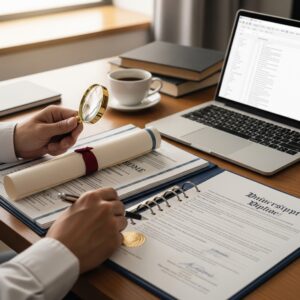
A foreign degree evaluation for U.S. purposes is often mandatory for both academic admissions and professional licensing. These evaluations help you translate your international credentials into U.S. equivalents, so universities, employers, and licensing boards understand your qualifications.
Credential evaluation services review your documents. This includes academic transcripts, degrees, and certificates. They help determine its equivalent to U.S. educational standards. The process requires:
- Official transcripts from all institutions attended
- Degree certificates or diplomas
- Academic and education translation services for documents not in English
- Course descriptions or syllabi (in some cases)
As for the processing times for credential evaluations, they can range from a few weeks to several months. This depends on the complexity of your educational background and whether you require translation services. Nevertheless, if you begin this process early, it ensures that you have verified documentation ready when your interview date arrives.
3. Organize All Required Documentation
Your visa interview will require comprehensive documentation. Apart from the standard visa application forms and fees, prepare:
- Valid passport
- Interview appointment confirmation
- Form DS-160 confirmation page
- Visa application fee receipt
- SEVIS fee receipt (for students)
- Admission letter from your U.S. institution or job offer letter
- Credential evaluation reports
- Financial documentation proving ability to support yourself
- Evidence of ties to your home country
- Academic transcripts and diplomas
Having these documents organized, translated if necessary, and easily accessible demonstrates preparedness and professionalism.
4. Understand How Verified Reports Strengthen Applications
Credential evaluation reports provide multiple purposes in your U.S. application journey. As for university admissions, they help admissions committees accurately assess your academic preparation. Meanwhile, for visa interviews, they provide consular officers with standardized information about your educational background. This reduces ambiguity and potential delays in the process.
Moreover, for professionals seeking licensure, including those in healthcare, engineering, education, or other regulated fields, the credential evaluations are mandatory. The licensing boards request these reports to be verified so that your international education is aligned with their standards. Obtaining a credential evaluation for professionals completed before your visa interview demonstrates that you’ve taken concrete steps toward your professional goals in the United States.
5. Prepare for the Interview Itself
The consular interview is an avenue for you to make a positive impression that can lead to your approval. Make sure to practice clear and honest answers to common questions about your educational plans, career goals, and why you chose a particular institution or employer.
Officers assess:
- Your genuine intent to study or work temporarily in the U.S.
- Your plans to return to your home country after completing your program or assignment
- The legitimacy of your educational or employment opportunity
- Your financial capacity to support yourself
Bring all relevant documentation in an organized folder to support your claims, and be prepared to explain any gaps in your education or employment history.
6. Consider Professional Guidance
True, with recent policy changes, the visa process can be overwhelming. To alleviate that feeling, consider consulting with immigration attorneys or educational advisors who specialize in U.S. visa applications. Although not required, professional guidance prevents you from common pitfalls and ensures your application is approvable as strong as possible.
Looking Ahead
The end of visa interview waivers causes a shift in U.S. immigration policy. It affects thousands of international students and professionals annually. In turn, a proper planning and thorough preparation can help you navigate the process successfully.
Start early, gather comprehensive documentation, complete necessary credential evaluations well in advance, and approach your interview with confidence and preparation. By taking these proactive steps, you can minimize delays and maximize your chances of visa approval, keeping your educational or professional dreams in the United States on track.